Saturday, January 21, 2012

Biriyani - Kerala style


Biriyani made with rice, meat, vegetables, eggs, fish and spices, has become a common Indian household dish. With most of the ingredients available readily, making Biryani is no longer a difficult task. I remember my childhood days when Briyani was made by my mother only on very special occasions, probably twice or thrice in a year. We used to enjoy every bit of it and looked forward for the next special occasion. Now it is made almost every week or atleast once in a month by most of us.


The other day I was reading the difference between Biryani and Pulao. While Pulavis made by cooking all the ingredients together, rice is cooked separately and mixed with meat or vegetables for Biryani. Well that was a revelation. There are so many regional variations for Biryani. Some of the well known ones are Hyderabadi Biryani, Sindhi Biryani, Awadhi Biryani, Malabar or Kozhikode Biriyani and so on.


I usually make Kerala Style Chicken Biriyani but I never had the patience to post the recipe. After receiving several requests from my readers, well finally, here is my recipe for Chicken Biriyani. Kerala Style Biriyani is aromatic and flavorful. The addition of Fennel Seeds (Perum Jeerakam) and tomatoes make Kerala Style Biryani taste out of this world. Additionally, Coconut Milk is often used in South Indian Biriyani and the taste gets even better. One ingredient which is sometimes left out while making Kerala Biriyani is saffron.


This is the recipe for Layered Chicken Biryani which is baked in the oven. Though I have tried making one pot Biriyanis, it has never come out well.
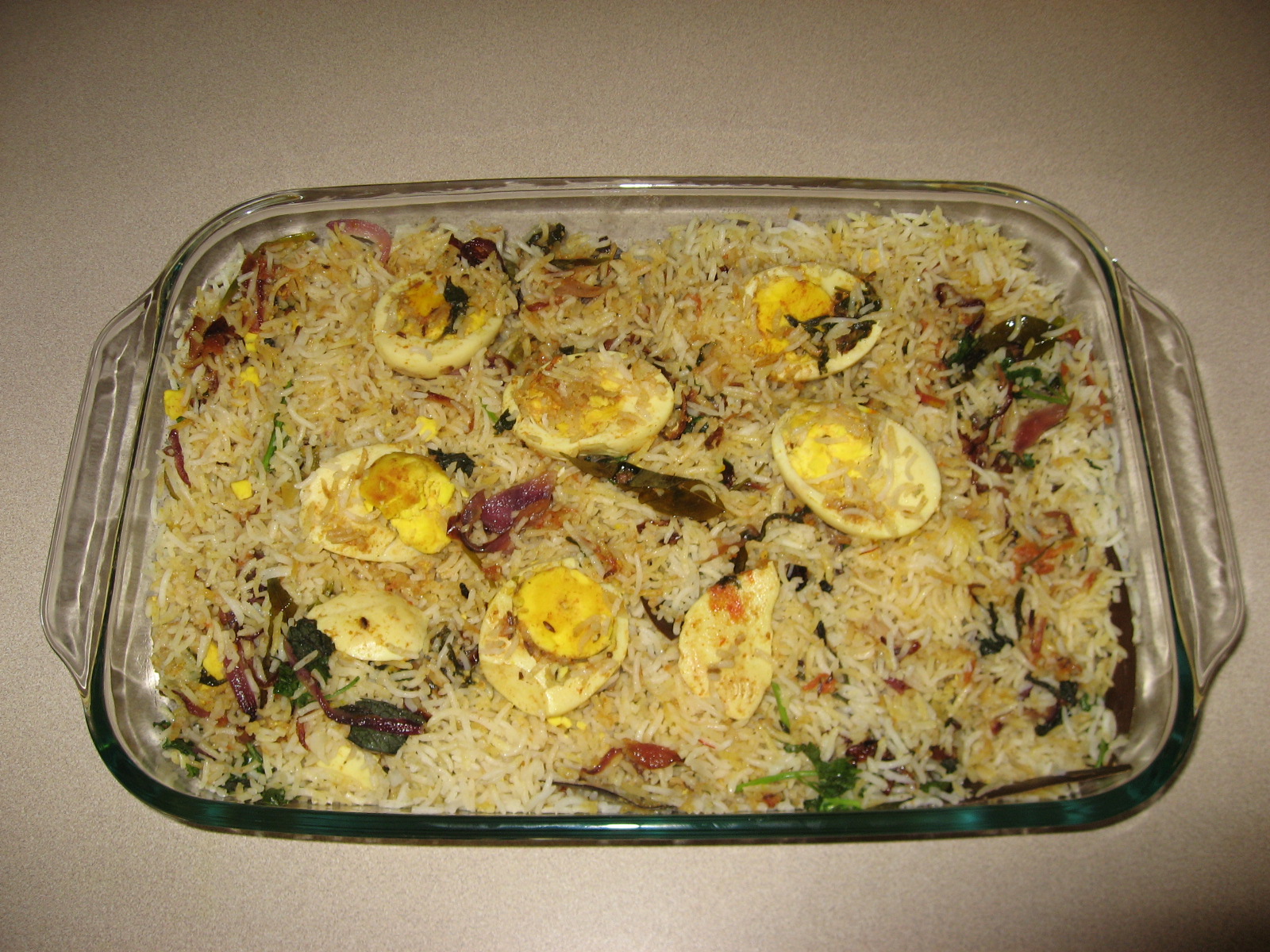

Ingredients
For the Rice

Long grain Basmati rice – 2 cups
Oil – 1 tsp
Biriyani Masala Powder – 1/2 tsp
Water – as required
Salt – to taste
For Garnishing
Thinly Sliced Red Onion – 1 big
Cashew Halves – 1/4 cup
Raisins – 1/4 cup
Almonds – 1/4 cup (optional)
Sugar – 1/2 tsp
Salt – to taste
Oil/Ghee – 1 tbsp

For the Biriyani Masala Gravy
Thinly sliced Red Onions – 2 large
Diced Tomatoes – 2 large
Potato (peeled and diced) – 1 big (optional)
Slit Green Chillies – 4
Cinnamon – 1″ piece
Cloves – 4
Fennel Seeds – 1/2 tsp
Bay leaves – 2 to 4
Curry Leaves – A small sprig
Chopped Cilantro (Malliyilla) – 1/2 cup
Chopped Mint leaves (Pudhina) – 1/2 cup
Dried Fenugreek Leaves (Methi/Uluva) – A few
Ginger Garlic Paste – 2 tbsp
Turmeric Powder – 1/4 tsp
Kashmiri Chilly Powder – 2 tsp (Alter according to your spice tolerance)
Chicken Masala Powder – 2 tbsp (Any brand, I used Eastern Chicken Masala Powder)
Home Made Biriyani Masala Powder – 1 to 2 tsp
Yogurt – 1 Cup
Lemon Juice – 2 tbsp
Salt- to taste
Ghee/Cooking oil – As required

For the Chicken
Whole Chicken (medium sized pieces) – 1 lb
Lemon Juice – 1 tbsp
Turmeric Powder – 1/4 tsp
Chicken Masala Powder – 1 tbsp
Kashmiri Chilly Powder – 1 tbsp (Alter according to your spice tolerance)
Pepper Powder – 1/2 tsp
Coriander Powder – 1 tbsp
Ginger Garlic Paste – 1 tbsp
Salt – to taste


Method


Soak Basmathi rice in water for around 45 minutes to 1 hour.
Wash and clean the chicken pieces thoroughly and soak it in water along with 1 tbsp lemon juice for around 10 minutes. Drain and keep aside.
Make a marinade using the above ingredients and rub it nicely on the chicken pieces. Keep it aside for atleast 30 minutes.
Meanwhile, heat 1 tbsp oil/ghee in a nonstick pan and fry cashews, almonds and raisins until the cashews and almonds are lightly browned and the raisins become plump. Drain and keep aside.


To the same pan, add the thinly sliced onions kept for garnishing and saute them on medium heat until they are fried and caramelized. This will take atleast 20 minutes. Keep on stirring occasionally so that the onions are not burnt. Add a pinch of salt and 1/2 tsp of sugar while frying the onions to enhance the taste.
Fill a big pan with 3/4th water and bring it to a rolling boil. Wash and drain the soaked Basmathi Rice and add it to the boiling water along little salt, 1/2 tsp biryani masala and 1 tsp oil. Cover and cook the Basmati rice for around 8-10 minutes till each grain is separate and 3/4 cooked but not fully cooked. Add more water if needed, so that the rice doesn’t stick together. Drain excess water and keep the rice aside.
Heat a big non stick pan or wok and add 3 tablespoons of oil or ghee.
Throw in fennel seeds, cinnamon, bay leaves and cloves. Saute for 2 minutes.
Then add onions,slit green chillies, curry leaves, dried fenugreek leaves, chopped cilantro and mint leaves and saute till the onions begin to brown.
Add the ginger garlic paste and fry for a minute or two.
Throw in the chopped tomatoes and cook till the tomatoes are pulpy and mashed.
Reduce heat and add 1-2 tsp of biriyani masala powder, 2 tbsp chicken masala powder, 2 tsp kashmiri chilly powder, 1/4 tsp turmeric and salt to taste. Saute the powders for a minute.


Blend 1 cup of yogurt with little water and add it to the pan along with salt and mix well. Allow it to simmer for a while.
Add the marinated chicken and diced potatoes to the masala gravy and mix gently. Cover and cook on medium heat for around 20 minutes till the chicken has been cooked thoroughly. Keep the masala gravy aside.
Meanwhile preheat oven to 350 degree Fahrenheit (175 degree Celsius). Apply some ghee or oil on a baking pan/dish or line it with aluminum foil to prevent the Biryani from sticking onto the pan. Layer it with the semi cooked rice and the chicken pieces and masala gravy alternatively. Sprinkle lemon juice in between. Garnish with fried onions, cashews and raisins.
Cover with an aluminuim foil or tight lid and bake for atleast 30 minutes. Allow it to cool thoroughly and then mix the biriyani gently. It’s best to keep the biriyani for a few hours before serving so that all flavors are absorbed.
Serve the Chicken Biriyani with Raitha, Pickle and Pappad.


Note
You can add coconut milk instead of yogurt for a better flavor.
If you are in a hurry, you can use any good brand of Ready Made Biryani Masala powder (Eastern, Saras, Melam etc.) instead of Home Made Biriyani Masala Powder.
It’s always better to use Whole Chicken while making Biriyani.
If you do not have a Conventional Oven at home, then you can layer the Biryani and cook it on stove top. Take a heavy bottomed pan and layer it with Rice, Chicken and Gravy as mentioned above. Cover the pan with a tight lid so that steam does not escape. You can also seal the lid with Chappathi dough. Cook the Biryani on very low heat for around 20 minutes.
To prevent the Biryani from burning at the bottom layer, it is better to cook it over indirect heat. Immerse this heavy bottomed pan in a bigger pan filled with little water and cook it on low heat for 20-30 minutes approx. You can also place the heavy-bottomed pan over a Tava or Frying pan instead of keeping it directly on stove-top and then allow it to cook over indirect heat.

Monday, January 16, 2012

Fish Cutlet


Fish cutlet can make with Canned Tuna Fish. Generally, cutlets are deep fried in oil, but in this recipe, I pan fried the cutlets and it turned out nice and tasty. These cutlets are far more healthy when compared to deep fried ones. My husband loved these Pan Fried Tuna Cutlets. So go ahead and try it and let me know the verdict.


These cutlets make an excellent appetizer or you can place it on a bun and have it as aBurger.

Ingredients
Canned Tuna Fish – 2 cans ( I used Chunk Light tuna in water)
Potato – 1 big
Egg – 1
Finely Diced Onions – 1 medium
Finely chopped Green Chillies – 2 or 3
Minced Ginger – 1 tbsp
Minced Garlic – 3 cloves
Curry Leaves (finely shredded) – A few
Oil – 2 tbsp
Turmeric Powder – 1/4 tsp
Red Chilly Powder – 1/2 tsp
Garam Masala Powder – 1/2 tsp
Black Pepper Powder – 1/2 tsp
Fish Masala Powder – 1 tbsp (Optional – I used store bought Eastern Fish Masala brand)
Salt – to taste
Bread Crumbs – 3 or 4 tbsp
Cooking Spray/Oil for frying – As needed

Preparation Method
Boil the potato along with salt until well cooked. Remove the skin and mash it very finely without any chunks. (Alternatively, you can pressure cook the potato for 2 or 3 whistles.)
Heat 2 tbsp oil in a pan and saute onions until translucent.
Add green chillies, ginger, garlic and curry leaves and saute for a few more minutes.
Add red chilly powder, turmeric powder, fish masala powder, pepper powder and garam masala powder. Saute for 2 minutes.
Drain the water or oil from the tuna and add it to the pan along with little salt.
Mix everything well and cook the tuna for 10 minutes.
Allow it to cool. Then add the mashed potatoes and egg. Mix everything nicely.
Add bread crumbs to the mixture and mix it to form a soft dough which will hold shape.
Make lemon sized balls using your palm and flatten the balls to form cutlets of any shape you like.
Heat a non stick frying pan and add 1 tbsp oil. (Alternatively, you can use cooking spray.)
Place the cutlets in the pan and fry each side on medium heat for 4-5 minutes.
Serve these hot cutlets with ketchup.

Wednesday, January 11, 2012

Pumpkin Ricotta Gnocchi


Hank Shaw is back, tempting us with pumpkin ricotta gnocchi. It's crazy good, and actually not as hard as you would think to make. Enjoy! ~Elise
Pumpkin ravioli with brown butter and sage is a classic for a reason: The color, the texture and the flavors of winter squash, fried sage and browned butter are a match made in heaven. But making ravioli requires a fair bit of skill. Gnocchi, however, are easy to make once you get the hang of it.
The key to making any dumplings is to make them as light as possible. We've all had leaden lumps of unhappiness before; they're memorable, and not in a good way. What keeps these gnocchi fluffy are the ricotta cheese and a light hand with the flour. Gnocchi dough is often sticky, and it's the ability to resist the urge to keep adding more and more flour that separates a good dumpling from a heavy one.
Keep in mind that some squashes are drier than others, and some pumpkins can be really wet. And the wetter the squash, the more flour you'll need to hold the dough together — and that makes heavy gnocchi. While any winter squash (except spaghetti squash) should work with this recipe, I prefer to use butternut or kabocha squash.
When it comes time to serve, it is important to let your butter get hot, to keep your gnocchi in one layer in the pan, and to let them cook undisturbed for a minute or more. You want your dumplings to have a crispy side and a soft, pillowy side, and this is how to achieve that.
Could you use olive oil instead of butter? Sure. You can also substitute rosemary or oregano or thyme for the sage. I've tried other combinations, and they're OK, but nothing is quite so wonderful as browned butter, pumpkin and sage.
The only thing that can make this dish even better is a dash of truffle salt. Truffle salt? Yeah, it's fancy, but a little goes a long way and it will make a refined, date-night dinner even more swanktastic.


Pumpkin Ricotta Gnocchi Recipe
Prep time: 30 minutes

Cook time: 15 minutes
The amount of flour you need to make the dough will vary depending on how moist your pumpkin or winter squash is.

Ingredients
1 cup of pureed pumpkin or winter squash
1 cup ricotta (use whole milk for best results)
2 large eggs
2 teaspoons kosher salt
1/4 cup parmesan or pecorino cheese
3-4 cups cake flour, Italian "oo" flour, or all-purpose flour
2-3 teaspoons minced fresh sage
1/4 cup unsalted butter
Black pepper to taste
Truffle salt to taste (optional)

Method


1 Mix the pumpkin puree, ricotta, parmesan, eggs and salt together in a large bowl. Add 2 cups of the flour and mix well with your hands. The dough should be very sticky, impossible to work. Add another half cup of flour and mix that in — you want the dough to still be pretty sticky, but pliable enough to shape into a large log. If it's not, keep adding a little flour at a time until you can get a soft dough that will be rollable. It should never require more than 4 cups of flour. Cover the dough with a damp towel.
2 Bring a large pot of water to a boil, then add enough salt to it so that the water tastes salty. Let this simmer while you make the gnocchi.


3 To make the gnocchi, spread some flour on a large work surface and have more flour ready. Cut the dough log into four equal pieces. Take one piece and cut it in half. Roll the piece of dough into a snake about 1/2 inch thick, then cut it into pieces about the thickness of a fork.


4 Dust the gnocchi with a little flour, then use one finger to push the dumpling up onto the tines of a fork. Let the gnoccho drop back to the work surface. This does two things: It makes the dumpling a little thinner and lighter, and it creates depressions and ridges that sauce can hold onto. If all this is too much bother for you, skip it. The gnocchi will not be quite as good, but they'll still taste fine.
5 Repeat this process with the other piece of dough and then, using a metal spatula, gently pick up a few gnocchi at a time and drop them into the water. Increase the heat to a rolling boil. Boil these gnocchi until they float, then remove them with a slotted spoon or spider skimmer. Lay the cooked gnocchi on a baking sheet and toss with a little olive oil so they don't stick together.
6 Now go back to the next big chunk of dough and repeat the process. it is important to boil gnocchi in small batches so they don't stick to each other.

7 When all the gnocchi are made, heat the butter over medium-high heat until it stops frothing. Add enough gnocchi to the pan to cover it in one layer. Do not let them stack up on each other. Let them fry undisturbed for 90 seconds. Sprinkle half the sage over the pan. Cook for another minute, then turn out onto plates. Repeat with the remaining gnocchi.
8 If you have to do this in several batches, keep the finished gnocchi on baking sheet in the oven set on Warm. Serve as soon as they're all done, dusted with black pepper and the truffle salt, if you have it.
Yield: Serves 4-8.